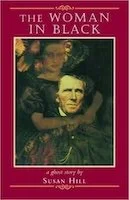
Review: The Wrath of Angels (Charlie Parker #11

5 stars. Oh hell yeah, Connolly crushed this. We got a super dark thriller, we got the return of an epic villain, we got some grade A banter with Angel and Louis, we got a glimpse of Colonial horror (finally! the series is set in New England, after all!) and, best of all, we got some answers. Absolutely loved it.

Our poor dear detective Charlie Parker is hired by two acquaintances whose fathers have recently passed away - but not before sharing the details of a secret discovery made years before: the crashsite of a plane, deep in the woods, and with it, money - a lot of money, and a list of names. Parker immediately realizes the importance of this list, and enlists the help of his old friends to ensure he finds it before it falls into the wrong, evil hands.

John Connolly is building a truly impressive mythology here - one that is quite dark and scary. The pieces are falling into place and I'm so pleased to report that even 10+ books later my memory hasn't failed me in any major ways. I'm not quite sure how to explain this, but it feels like the author really, really tried with this one - with the plotting, the pacing, and the way the characters orbited each other. His efforts paid off.

I particularly enjoyed the inclusion of local folklore, here, and the way it intersected with the main plot. It lended a fresh, spooky edge to the setting as well as a very satisfying demise of a certain character. Sometimes Connolly's deep dives into character or place can be tedious; here it was fascinating and fun. 

Look - these books are a bit ridiculous, okay? A list of names - really? A sophisticated shadow organization with unlimited resources and they rely on hard copies? But I truly didn't mind. I loved that the list created this sort of dark treasure hunt vibe - a set-up for a terrific reveal.

I am excited to keep the series going. This should really be a TV series.

The Wrath of Angels on: Amazon | Bookshop.org | Goodreads | StoryGraph
Review: The Great Ghost Rescue

5 stars. 1 for being delightfully dark and spooky, which spoke to me as a kid (I can see so vividly my horror-loving origins); 1 for its heartfelt message against displacing populations who are different from your own - and forgiveness; 1 for its atmospheric setting; 1 for its tight pacing and writing; and 1 for the bravery of its two unlikely heroes: Rick and Humphrey the Horrible. 

Ghosts across Britain are facing a crisis. Uprooted by technology, modern society, industry, and capitalism - and all the buildings and highways that come with - these creatures are torn from their peaceful haunts and essentially made homeless. One family, forced by their Scottish ancestral home, has the good fortune to encounter a young boy who wants to help. Together, they hatch a plan to create a safe place for wandering souls: a sanctuary. Shenanigans ensue. 

Eva Ibbottson is one of the greats - I hate that she was marketed to "fans of J.K. Rowling" when I was a kid (which you can still find on the covers). To me, she is better. Sure, she has a sort of similar quirky sense of dark humor and whimsy when it comes to the supernatural (if you squint your eyes), and I guess they're both... British, but she's just simply a much better writer - from the big picture premise down to the sentence level. 

It holds up. Very funny, very witty, and very spooky. I have this weird anxiety around somehow "forcing" my kids to consume the media I enjoyed as a kid (dooming them to a torturously "uncool" existence, out of the loop on all current playground obsessions), but these are classics, right?! They aren't even problematic, right?! Being spooky is genetic, right?! It's actually my duty to give her a well-rounded, foundational education, right?!

The Great Ghost Rescue on: Amazon | Bookshop.org | Goodreads | StoryGraph
Review: Faerie Tale

2 stars. I almost never, ever, ever, ever regret reading foundational horror - even if it's weird, even if it's dark, even if it's, well, kind of bad. In this case, I actually kind of relished falling into this odd, odd story every time I picked it up (life was chaotic this week). But ultimately this one felt really, deeply outdated - not in an interesting or fun way, in a legitimately annoying way. So much can fall under that criticism - the awkward dialogue, the unbelievable (busty, horny) female characters - or maybe not. Maybe it just isn't the best thing out there. And that's fine!

A move to the East Coast puts the Hastings family directly in the line of supernatural fire: the creatures and monsters of mythology and folklore are real, and they inhabit the land of their new home. One by one each member of the clan experiences strange and unusual happenings around the property, only to forget them later. Finally, one is taken, and the others must use ancient knowledge to bring him back. 

I am sorry for being grumpy about it; I realize that this is a classic and many readers have fond memories of reading it in the 80s. I just kind of couldn't be convinced, not with the clunky POV shifts, forced attempts at colloquial conversation, and contrived character "development." It took awhile too, I think, to get to the point! And unfortunately I didn't find it scary at all. A star was docked for, in this case, a UCD (unnecessary cat death). Was it just me, or was there a lot of self-insertion - several writer characters, for example? 

Still, I absolutely loved the premise, and the passage describing Mark's encounter with The Wild Hunt. Who doesn't love a good Troll Bridge?! All of the scenes describing supernatural encounters were super vivid and compelling. The climactic sequence was stunning. I feel like Feist really did his research into folklore - I recognized echoes of one of my favorite books of this year, The Broken Sword. That sort of thing is interesting to me and I was actually hoping for more of it. 

Idk! It was... interesting, at the end of the day.

Faire Tale on: Amazon | Bookshop.org | Goodreads | StoryGraph
Review: Grim Portraits

4 stars. Up my alley - this playful, clever, sometimes very dark collection reminded me of Clive Barker in the best ways. I'm new to this author and ready to dive into his other works; really my only quibble is that I wanted more, or I wanted the stories to be longer. Burke is supremely talented and I was really struck by the quality of his prose. From the big idea down to the word choice, this is a highly entertaining book and I recommend it to horror fans looking for art-related themes, as I am ALWAYS.

I liked all of the stories, but "The Acquisition" knocked my socks off, closely followed by "The Amp," which was so much fun. I am inspired.

Grim Portraits on: Amazon | Bookshop.org | Goodreads | StoryGraph
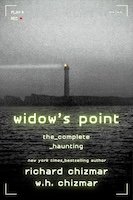
Review: The Burning Soul (Charlie Parker #10)

3 stars. This one didn’t really capture me as much as the others. I really enjoyed the stuff about Randall and the exploration of identity and insanity, but I found a lot of the other through-lines tedious. And I actually predicted a couple of the twists, which hasn't happened before. That being said - zero regrets.

Private investigator Charlie Parker is asked by a lawyer acquaintance for help - a client of hers, with a secret murderous past, is being sent dark and threatening messages. There’s also a girl missing, and allegations abound in the small town from where she disappeared. 

Idk! Idk. I’m not done with this series at all - I’ve learned how comforting it can be to have a reliably familiar world to jump into over a long period of time. It was only a matter of time before I got to one that didn’t hit or click right. I just wasn’t hooked. 

I’m learning that when Connolly leans into religious horror - like demons or angels or super self-righteous villains - he really succeeds. When he leans into ghost stuff, trying to create tense or creepy haunt moments, he’s less effective. Just like in previous books, I found the appearances of Charlie’s daughter cheesy, and kind of random, and not as scary.

The book absolutely still crackles with tension, though, and showcases the strong sense of place so characteristic of John Connolly’s writing. That man really loves to describe a dive bar.

The Burning Soul on: Amazon | Bookshop.org | Goodreads | StoryGraph
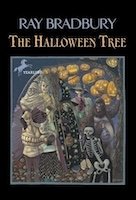
Review: Dungeon Crawler Carl (Dungeon Crawler Carl #1)

4 stars. Listened to this on audio with my husband and we both totally loved it. Such a strange ride... probably unlike anything I've ever read. Very funny and enjoyable and action packed! Hats off to Jeff Hays - who is seriously, unbelievably incredible - for bringing everyone to life. 

In short: one night, an alien corporation takes over earth and redesigns it into a dungeon, where survivors must take part in a competition, which is filmed and broadcast to the rest of the universe. Carl, our hero, is alive only because he followed his girlfriend's cat outside right before the dungeon erupted into existence. He and the cat enter together, and chaos ensues.

For what it's worth: I'm not a video game person. I was never allowed growing up, so it doesn't come naturally to me and I didn't immediately understand some of the vocabulary. I've watched a bit of D&D, which helped. Luckily most of it is intuitive - my ignorance didn't detract from the experience.

Still, what a weird way of worldbuilding. Is the writing itself even that good? I'm genuinely unsure. All I know is that this is something special: a very unique reading experience with unique characters and unique circumstances. And it's funny.

The hype is real!

Dungeon Crawler Carl on: Amazon | Bookshop.org | Goodreads | StoryGraph
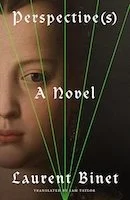
Review: Shirley

4 stars. The author, in her acknowledgements, calls this book a "fictional exercise," which is a perfect descriptor - it almost feels that way, in turning the pages, like the book came out of time spent playing in the Shirley Jackson sandbox. I can't blame her - hello from deep down the Shirley Jackson rabbit hole - but I did have to shake off the urge to call it presumptuous. 

Rose Nemser, a young and expecting newlywed, moves in with her husband Fred to the Jackson/Hyman house in North Bennington. Fred and Stanley hit it off, professionally and academically, while Rose and Shirley inch their way towards a strange friendship. Caught up in the odd liveliness of the house and drawn to the turbulence of Shirley and Stanley's marriage, Rose attempts to navigate a maze of questions, mysteries, and discoveries from within the unusual and creepy Shirley Jackson universe.

If you can look beyond some truly crazy word choices (ratiocinations? concomitant?), this is a fairly quick read, and very engrossing. The plot unfurls thoughtfully and yes, it absolutely channels Shirley Jackson. My heart was in my throat for the last third of the story, I truly could not predict where it was going or how it would end. I was deeply disturbed by Rose's dream, by design, but I was bothered more personally by the depiction of marriage. The author also leans really grotesque (especially in her descriptions of Stanley), but it never feels too forced or overwrought. Just grotesque, because that's what it was, that's how it was, that's how it happened.

There is a central mystery to the story but overall I would call it more character-driven. It is, like everything associated with Shirley Jackson, a study in repressed rage. It is incredibly well-researched. I look forward to checking out the adaptation. 

Shirley on: Amazon | Bookshop.org | Goodreads | StoryGraph
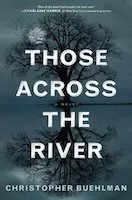
Review: Shirley Jackson: A Rather Haunted Life

10 stars. I highly, highly recommend this compelling and detailed biography. For those curious about Shirley Jackson's life, this book offers two golden outcomes: it will satisfy your curiosity and elevate your reading experience of her works. It's the perfect blend of gossipy and academic; it's possibly the most successful, engrossing biography I've ever read and will make the Kelly Choice Awards, no question.

Organized chronologically, A Rather Haunted Life begins with Jackson's family background early upbringing, eventually settling into a rhythm where each chapter dives into a major work - notes on its development, a summary, some excellent analysis, and the public reaction - with the life stuff woven in. The author, Ruth Franklin, incorporates well-placed pictures, footnotes, excerpts, and quotes, painting what rings to me as a fair and accurate portrait of one of the most brilliant American minds.

There are major themes: Jackson's fraught relationship with her mother, for example, her messy marriage, and the impossible push and pull Jackson felt between her occupation and her role as housewife and mother herself. These are prominent themes in the biography and also themes in Jackson's work. But Franklin never neglects the little details - the minor tidbits - that make Jackson so effective and admirable:

"In “Notes for a Young Writer,” a lecture on writing fiction composed as advice to her daughter Sarah, Jackson would relish the “grotesque effect” of the “absolutely wrong word”: “ ‘I will always love you,’ he giggled.”"

I should admit that I am the perfect audience for this sort of thing: a wannabe student of the horror genre and a Shirley Jackson superfan. Every page was interesting to me. I didn't want it to end. I read and re-read passages, returned and referenced many times (the chapter on her encounter with Dylan Thomas was especially fascinating, as were the descriptions of Bennington College, one of the most unique higher institutions in America). 

Some readers may feel that Franklin expects a bit too much. My own gaps in knowledge around Marxism and Communism and the American political landscape pre-WWII were super apparent. And I'm embarrassed to say that I didn't recognize many of the author names - popular contemporaries of Jackson and Hyman. That's okay - more to learn. It didn't impact my understanding or takeaways about the book's subject.

Speaking of takeaways, a big personal one for me involves parallels. Franklin points out the way McCarthyism echoes the Salem Witch Trials, a topic on which Shirley Jackson published a book. Jackson notes these familiarities between past and present below - and it's impossible to not continue the pattern and draw lines connecting the past, Shirley's present, and our present today.

"But if “fashions in fear change,” people do not. The intelligent are in the minority, their measured voices in constant danger of being drowned out by the din of the mob. “We are not more tolerant or more valiant than the people of Salem, and we are just as willing to do battle with an imaginary enemy,” she wrote resignedly. “The people of Salem hanged and tortured their neighbors from a deep conviction that they were right to do so. Some of our own deepest convictions may be as false. We might say that we have far more to be afraid of today than the people of Salem ever dreamed of, but that would not really be true. We have exactly the same thing to be afraid of—the demon in men’s minds which prompts hatred and anger and fear, an irrational demon which shows a different face to every generation, but never gives up in his fight to win over the world.”"

I'm so used to hearing the word "unprecedented," I forgot that political bullshit has existed since the beginning. To be reminded so eloquently is somehow both distressing and comforting at the same time.

The idea that so much is apparently and unfortunately universal across time and space manifests in other, more personal ways. I was really struck by the sense of kinship I felt with someone who lived decades ago, in a different world. The struggles a young Shirley experienced in adolescence and early adulthood were familiar - classic tropes, really: feeling like an odd or ugly outsider, feeling unwanted, feeling socially/romantically undesirable and awkward/ungainly. That familiarity stayed with me through her anxieties of raising children in a chaotic world. The undeniable pull Shirley felt to leave - to drop everything, to untether herself, to just exist, almost noncorporeal, even at the cost of so much - is understandable, and relatable. 

One more thing: many words are included on the various questions and interpretations around the meaning of The Lottery - which was a true cultural moment. But honestly (and this in my mind is reinforced by her grumbling about it), it seems to me that Jackson simply baked a dough made of her astute perceptive nature, her dark humor, her penchant towards sarcasm and exaggeration and irony, plus her knowledge of ritual, and out came the story. I’d believe that sooner than I’d believe in some sort of preachy social commentary or agenda, though some of that was probably baked in naturally.

A Rather Haunted Life is so many things: a portrait of a person, and a marriage; a literary analysis; a snapshot of a specific moment in American history; a glimpse into the world of the generation that raised my parents; a study of repressed rage. And now it's also my entire personality. 

Shirley Jackson: A Rather Haunted Life on: Amazon | Bookshop.org | Goodreads | StoryGraph
Review: Found: An Anthology of Found Footage Horror Stories

4 stars. Oh come on! This was really delightful! Sometimes you don't care how groundbreaking or sophisticated or perfect a story is because you're having so much fun! And I happen to love found footage - originally, epistolary books, starting with Kate Klise and moving up through the Princess Diaries series and landing somewhere around Night Film. So this was right up my fucked up little alley.

This outstanding short story anthology evokes one of the best things about horror: the journey. The feeling you shouldn't be reading/watching/consuming, but you are doing it anyway. The "I can't look away" feeling followed by the relief when it's over only for the unease to return later, when you're in bed, in the dark, and one foot happens to be hanging off the bed, exposed to open space and whatever might be waiting for it under the bed.

Related: there's also something really millennial-coded about these stories, and maybe about found footage in general. We are maybe the most computer literate generation: we grew up alongside the internet, we experienced firsthand online discovery, and the shock of weird rabbit holes, of stumbling across something we had no business viewing. Found footage taps into that, I think.

Of course some stories are better than others, some are cheesy, some are a little too derivative. Let's all argue about which ones we love! My personal favorites: "Junk Pickup," "Ghost Town Adventures," and "Green Magnetic Tape" for its sheer cleverness. I would've read a thousand more. This is a must-read for fans of horror, found footage, and creepypastas.

Open, click, press play... if you dare. 

Found on: Amazon | Bookshop.org | Goodreads | StoryGraph
Review: The Whisperers (Charlie Parker #9)

4 stars. Still going strong! While I'm not able to perfectly recall every detail, character, or important piece of background from each book in this series, I can recall enough to 1) recognize the familiar tropes, patterns, and twists and 2) start putting the big picture together, which is super exciting. And also, it's just really darn fun to encounter old friends in new ways. Callbacks are fan service for a reason! It’s been interesting to discover all the benefits of a long series when I kind of almost expected drawbacks.

The Charlie Parker books, like a lot of mysteries, don't unfold in a linear fashion, but this one really takes the scenic route, so forgive me for this awkward summary: a group of Iraq War veterans, probably at the behest of an organized evil, establish a smuggling operation for antiquities looted in Baghdad. Included among the stolen items is an unassuming box that attracts the attention of a cancer-stricken man, Herod, who is guided, after suffering a near-death experience, by a terrifying noncorporeal entity he refers to as The Captain.

The box lands, along with other goods, in a shuttered motel near the Canadian border, as planned. But each of the soldiers involved starts to fray at the edges: they hear voices, whispers. They withdraw, and act out of character. Several die by their own hands. Meanwhile, the box has attracted the attention of someone else - The Collector. And this is when Charlie Parker gets involved. 

I picked a hell of a week to read a book about the costs of war, but here we are. It tackles head-on the topic of PTSD, specifically the PTSD that plagued/plagues veterans of the Iraq War in the 2000s. Surprise, surprise - there was/is very little tangible support, or relief. It was a complicated conflict with complicated outcomes, many of which we are still learning. And perpetuating, literally today. America is infuriating, often. But John Connolly specifically states in the intro that he didn't want The Whisperers to be preachy (he sort of failed), so I don't want this review to be preachy either (I sort of failed also). 

Turning back to the story: I alluded to this above, but this one does seem, compared to the others, a little extra meandering and overstuffed. A little challenging to track. Someone should make a wiki for this universe! I would reference often! I docked a star for that. But I gave one back because I absolutely loved the moments of horror. Connolly leans in to the scary big time - we even get a creepy clown, as a treat - and I ate it all up.

It's strange to think that these books - intensely dark and disturbing as they are - are comforting, but they are. Almost a happy place. With this one I actually felt tempted to dive into the next one immediately, instead of reading a typical palette cleanser. The ending teases something really crunchy and awesome and I just know poor Charlie Parker has more monsters heading his way. I can’t wait to see how he fights them.

The Whisperers on: Amazon | Bookshop.org | Goodreads | Storygraph