Review: Thin Air

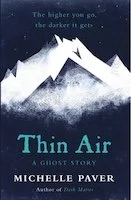
4 stars. Holy moly - Michelle Paver really sneaks up on you! This book was downright heart pounding - even before things ramped up I was jumping at noises and spooked by shadows. Highly recommend for fans of arctic horror, historical horror, or ghost stories. It packs a punch.

Through the eyes of the group doctor, Stephen, this book chronicles an expedition taken by five Englishman in 1935 to climb and summit Kangchenjunga, the third highest peak in the world. Following almost literally in the footsteps of the mountaineers who attempted before them, the group faces extreme weather, altitude sickness, and avalanche risk to reach their goal. And there's something else, something that feels very off, and very sinister... something that is stalking Stephen to the point of madness.

Paver effectively explores one of my favorite themes in Dark Matter, and she returns to it here: man's determination to conquer the wild. The pursuit of honor and glory - to be "first" - to achieve greatness - to be recognized in the history books. I enjoyed the way Stephen reckoned with this: in the face of threats both natural and supernatural, even at his most terrified, or most exhilarated.

"Perhaps that’s what we find frightening. Being on a mountain forces us to confront the vast, unsentient reality that’s always present behind our own busy little human world, which we tuck arounon:d ourselves like a counterpane, to keep out the cold. No wonder that when we trespass into the mountains, we create phantoms. They’re easier to bear than all this lifelessness."

And it was smart to weave in a competitive brotherly relationship. Much more interesting and compelling than say, sexual tension. I also loved Paver's British colloquialisms, which only added to the story and even the horror at times. I didn't appreciate Cedric - a blatant trick that she's used in books before! - but was able to determine his arc early so I didn't have to be absolutely petrified for him the whole time.

I have to applaud Paver, as well, for making something like a backpack so profoundly diabolical. And, as always, for embracing a story about ghostly darkness dancing with something even darker: the selfishness of human ego. I have a feeling this one will stick with me. 

"...that lump of rock and ice will be there when the human race has broken and receded like a wave. It will never know what dreams and fears it has inspired, or what fierce desire. It will never know what haunts it."

Thin Air on: Amazon | Bookshop.org | Goodreads

Review: Wuthering Heights

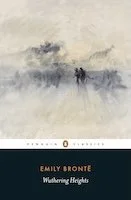
5 stars. Wuthering Heights is having a moment. And I am jumping in, face first. One of my reading goals for 2026, after all, is to read more classics, and with all the current *waves arms* discourse, it seemed like the perfect time to give it a try. Dusty carpets, watery porridge, locks of hair and all.

The Moors: has there ever been a more sighed-about gothic setting? When Catherine Earnshaw's father comes home from a trip with a wild young boy instead of promised gifts, he alters the fates of his estate, his children, and his children's children forever. Heathcliff, outsider though he is, bonds with the young Catherine even as he endures abuse, prejudice, and punishment from her family. After Catherine, due to circumstances not entirely beyond her control, marries another, Heathcliff sets himself upon a course of profound, complete revenge. 

It's an extraordinary book. It's extremely readable. It's oddly engrossing. It's fascinatingly-written on a sentence level (those speeches! the literal blocks of dialogue!). Idk if this makes any sense, but the words felt good to my brain. Putting this book down felt like a record scratch, or a velcro rip, as I reluctantly blinked my way back into life. These characters - almost to my dismay - wormed their way into my brain to the point where I would think about them on dog walks, in the car, or running errands. 

It's so gossipy - it's almost like watching a reality tv show, but also more like a soap opera, maybe? The pain of these insufferable people is on brutal display. They all prickle with self-righteousness and resentment and judgement. They are openly mean and vindictive. They are childish and selfish and cruel. There is not a single one who can regulate their emotions properly - it is a guidebook to unhealthy relationships, to fighting unfairly, to making impossible situations more impossible for themselves and for others. I don't quite know how to explain why this becomes so entertaining through the framework of the story, because honestly, it's depressing.

And no, unfortunately I did not feel “primal, sexual” while reading this book - I wish I had, that sounds awesome - mostly I just felt a little perplexed and captivated by the sheer strangeness of what I was reading. This book is about death, not sex. It's about death - or maybe, life after death? - and racism and generational trauma and isolationism and pain and unreliable narrators and yeah, now I'm just saying what everybody else says, because they are all correct.

But look - it is stirring. It is special. It is one of those mile marker books - there's the you before, and the you after reading it. I get it. It's the sort of book you want to immediately start over again, so you can peek into these lives with new awareness and context. I loved it. I loved the masterful turns of phrases ("he's such a cobweb, a pinch would annihilate him"), the details, the moody atmosphere. 

[I have to touch on something - something that has been touched so much it's been crushed into pure, divisive chaos. But I just have to share: having heard about the controversy around Jacob Elordi's casting, I was curious about the references to his character's skin color in the book. And... oh. They were not just references. It is an actual cornerstone of his entire existence. The book explicitly tells us this. Emerald Fennell has made it pretty clear she's not adapting this book - she's playing in the WH sandbox. Still, seems odd. I wonder if there would even be a story here without this crucial character element. But this is Kelly Book Stuff, not Kelly Movie Stuff. I digress.]

I highly recommend reading up on the Brontes - learning about Emily's upbringing and short life was informative and added an interesting layer to the reading experience. (That's a polite way of sharing that I went down an obsessive rabbit hole but I'm scared to mention anything about obsession within range of this book at the risk of Heathcliff outdoing me.) Emily must have been a distinctly astute observer of human nature to have captured its ugliness so vividly. What cycles of aggression must she have witnessed? I read about the Bronte paracosms and the idea that this book was her sandbox, in which she created an enclosed world, is fascinating. And dark. 

So. There you have it. You're welcome. The masses were clamoring for Kelly's thoughts on this book and I am, as ever, happy to give the people what they want. Throw this on the pile: Love it? Hate it? Who cares? Read it.

Wuthering Heights on: Amazon | Bookshop.org | Goodreads

Review: The Occultists

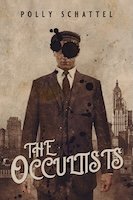
4 stars. This is by far one of the most interesting horror novels I've ever read. It took me ages, but I think the amount of time I spent in this story only added to my investment and curiosity about where it would lead. I understand why other reviewers want to discuss in a book club - I'd love to hear how others would unpack this; I'd love to hear the theories. 

Lonely teen Max Grahame forms a plan to escape his circumstances, made dire by a bully of a stepfather and a very ill mother. He takes a job at his small town's postmaster's office, only to discover that the postmaster has a peculiar and secret interest - magic. As Max learns more about his employer's occult beliefs and practices, his world widens, his talent takes off, and he becomes aware of his unintentional role in a conflict between two factions - dangerous, and global - cosmic, even - in scale.

Heaps of praise around the author's research is well deserved. This truly reads like a slice of history with real events and elements sprinkled in. Max's journey is also, I would say, impeccably designed. It's an almost perfect full circle novel, with several seemingly random loose threads woven back into the fabric beautifully before the end. That care and deliberation (which is also apparent in the writing itself) is what earns 4 stars from me.

My quibbles: Max sometimes read his age but often felt much younger to me. Pacing - as others have noted, the story really, really dragged toward the end. The figurative language was a bit much - maybe slightly overwrought - at times. I didn't always enjoy the way female characters - their bodies, their breath, their physicality - were described. And much of this story felt a little bit unknowable, or untouchable, or inaccessible, to me. 

But honestly: no regrets. This is a hidden gem, very unique, and very creative. Not a consistent page turner, but worthy of your concentration and commitment. The moments of horror will stick with you.

For more: Vita Nostra, A Dark Song (film), The Illusionist (film). 

Review: Victorian Psycho

4 stars. It's not like we haven't seen this before... in many shapes and sizes. But this one effectively - delightfully - evokes its granddaddy in all the ways that matter. Consider me deeply impressed. And disgusted. 

The Victorian psycho in question is Winifred Notty, newly appointed governess to the Pound children at Ensor House. Her wards, Andrew and Drusilla, are insufferable, though nothing compared to their dreadful parents. But Miss Notty is full of surprises, and secrets, and when guests arrive for the Christmas holiday, bloody chaos ensues.

Sharp and clever in so many ways, Victorian Psycho is a great time. It pulls a lot from the classic: the protagonist’s topsy turvy grasp on reality, dark and creative kills, etc., but this book is shorter, tighter, and simpler than its American predecessor. It still manages to weave a rich tapestry of disturbing characters. Nobody is spared by the murderess, or the author. And it's hilarious.

Check TWs. I can't recall having read a more graphic book.

Victorian Psycho on: Amazon | Bookshop.org | Goodreads

Review: Pilgrim

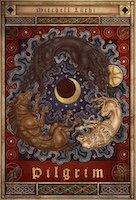
3 stars. Pilgrim is hailed as an obvious successor to the medieval horror giant Between Two Fires, and I can't disagree. It initially follows a German knight and a diverse group of companions as they embark on a dangerous journey to transport a sacred relic. And then their caravan is hit with a major sandstorm, from which they emerge under different stars. This new land, to say the least, is dark and full of terrors, and complicates their quest, which quickly becomes to return home. In a time rich with spiritual belief, superstition, and religious conflict, the knight and his crew face profound revelations amid threats from demons both physical and internal.

On paper, I should not have slogged through this - and yes, the action sequences / monster episodes got and kept my attention. But something about the writing had me chipping away at an uncharacteristically slow speed. The first eight chapters or so, especially. I really wanted to get the details straight, and learn the characters head to toe. I wanted to get their names and heritages and motives down so I could enjoy the wild ride. So I read and re-read those chapters many times, waiting for things to click into place. 

It didn't quite work. The story picked up, but even at the halfway point, I was SMH like how can cosmic religious horror be so... boring? I wasn't not enjoying it, it was just... sloggy. Heavy, dense, bogged down. As creative and cosmic as the imagery was, it was also excessively descriptive, and repetitive. Sometimes it felt like reading a textbook.

But yeah: in addition to the fact that he knows his way around a thesaurus, the author is obviously very talented. One review mentions giving this book 5 stars despite not enjoying it, because it's such a layered, detailed, researched accomplishment. It is incredibly impressive: a historical tapestry of interesting characters, vivid worlds, and grotesque monsters. (He has his favorite words - "slavering" - and his favorite phrases - "gaping maw" - but I digress.) There's a lot of philosophical dialogue - some of it really dripping with angst. The author clearly had a very specific vision for this story and I'd say he likely achieved it for himself. The horror elements are stunning - and stunningly disgusting. 

There's a good chance that if you enjoyed BTF, you'll enjoy this. But go in knowing it's not the same book. If I was more knowledgeable about the big religions, their deities, their origin stories, their myths and legends, and their theistic dynasties, I probably would’ve connected with it more. And I genuinely wish that I did. Religious clash and overlap is something I'm interested in and fascinated by. But this, over and over again, even on the final page, felt like something for the experts. 

Pilgrim on: Amazon | Bookshop.org | Goodreads

Review: Revelator

4 stars. Really strange, and beautiful; this book is many things. I’m still processing. I may have to read it again when I’m out of the newborn phase and a little more clear-eyed. There’s a lot layered in… it’s a dark fable that touches on religion, fanaticism, tradition, power, morality, humanity… Big themes. Deep questions. Ambiguous answers. Or maybe clear answers, with ambiguous consequences. It showcases humans at their very best and very worst. I say this often in reviews - I’d love to read this for a lit class and have some things analyzed and explained to me. It’s worth a close study.

How to explain? Stella Birch is our main character, and she is strong, charming and feisty. The book alternates between her unusual coming-of-age in the 1930s and the aftermath of her guardian’s death in the 1940s. She is a revelator, which means she can take “communion” with her family’s “god,” which lives in a cave on their property. Though it might make her an iconic herald of “god’s” “message,” it is a rough and damaging responsibility, and the more she learns the more she resists. But the cycle continues, and soon another revelator is born to carry on the family’s worship and Stella must choose between embracing her dark heritage or breaking the cycle once and for all.

Or something like that, anyway.

This book is historical horror at its finest and its most unique. The sense of time and place is very strong and very important. The author did his research and the level of detail is admirable. Stella is also a formidably awesome heroine. Her protectiveness and loyalty and determination are the beating heart of the story, as are her relationships with Abby and Alfonse, both of them saviors, sometimes annoyingly.

I thought the depiction of different types of goodness and different types of evil was very interesting. I don’t know how metaphorical or allegorical the author meant to be, but I frequently found myself considering cults, especially religious ones, and the way cult leaders apply the concept of “chosen ones.” The complex sense of obligation and pride and gratitude and special-ness that creates. The difficulty to resist. Especially when it’s family. This book wrestles with all of that and more.

Anyway. I wouldn’t describe Revelator as particularly scary. But it is captivating and intense and unique. I saw it described somewhere as a book that is more about the journey than the destination and I think that’s true. It will probably haunt - and inspire - me for a long time.

Revelator on: Amazon | Bookshop.org | Goodreads

Review: Moriah

3 stars. This was really breathtaking; haunting in every sense of the word. I love stories like this, that wear a lot of hats: a historical snapshot, a study of grief as singular driving force, a tapestry that unfolds very slowly, a bleak tangled knot of characters that orbit each other over the course of one week.

Former Rev. Silas Flood travels to a family home called the Yellow House in Moriah, Vermont as a journalist investigating the family’s alleged ability to conjure spirits during nightly seances. This is in the 1870s, and the whole country is deeply spiritually curious as it processes the traumas of the Civil War. There he encounters medium brothers Thaddeus and Ambrose Lynch, their sister Sally, the various guests drawn to their conjuring skills, and the spirits they call from the afterlife. Flood, walking around with his own personal tragedies, becomes swept up in the questions around belief, desire, memory, guilt, and fear that haunt the entire group - as well as family secrets.

It’s a fascinating moment in time wrapped in a very captivating delivery. These characters are super broken - it’s a bleak, disturbing book - but I couldn’t look away as they churned in turmoil. The spirit aspect is very unique and probably not what makes this book horror… I think that would be the deep dive into the horror that is the human experience. Like I said, bleak.

So why 3 stars? 3 stars means I liked it. I have read books of a similar tone (sort of an… exercise-y, literary, biblical allusion-infused, words-at-the-forefront tone with heavy themes - reminds me of something I’d read in school, begging to be inspected and called clever) and they all land around 3 stars for me. I wouldn’t touch this is you’re in a grim mood unless you want to wallow in it. But again, I liked it. I like horror in all its flavors, even its most melancholic.

Moriah on: Amazon | Bookshop.org | Goodreads

Review: The Devil Aspect

4 stars. I'm all over the place with this one - on the one hand, I found the first half pretty bland and boring. On the other hand, I'm 9 months pregnant (which means almost anything could put me to sleep), and I just finished Swan Song, one of the most entertaining epics ever written. At times I was like, is this not really predictable, and cheesy? And at other times I was like, just one more chapter... just one more page... couldn't put it down. Sometimes the writing felt borderline pretentious, other times it was beautiful, cozy, dark... I should also mention that the political backdrop felt extra terrifying thanks to current events. Overall, I have to give it a good rating, because I have absolutely zero regrets reading it and would recommend it.

Craig Russell's The Devil Aspect takes place in Czechoslovakia in the mid-30s, where a young psychiatrist named Viktor takes a position at an isolated asylum in a rural castle. His goal is to examine, and hopefully treat, the "Devil's Six," a notorious group of criminals imprisoned for committing particularly violent crimes. As he settles in and conducts his studies, however, he uncovers more than the darkness within his patients: in nearby Prague, women are being murdered in the style of Jack the Ripper; in the castle's small village, children are going missing; his own friend Filip is slipping into depression; and he feels somewhat haunted in the medieval castle and its surrounding forest. 

It all comes to a head in a super maniacal, destructive, villainous way. Though maybe more of a dark thriller than a horror novel, there are some truly creepy moments well-placed throughout the narrative. Russell clearly did his research, so the scientific aspects ring true, but he writes with a respect and reverence for the folklore of his setting, creating some really rich, delicious, supernatural layers. This book screams to be read by the fire, during a blizzard, under the blanket, with a beer. It is just that gothic and atmospheric and vibe-y.

I can totally see why this is so popular, and I'm looking forward to chewing on it, now that I can see the big picture, so to speak. My first by Craig Russell, but it definitely won't be my last. 

The Devil Aspect on: Amazon | Bookshop.org | Goodreads

Review: Eaters of the Dead

5 stars. I read this and loved it in college, but it was so, so, so great to revisit it after leaning into my Viking interests over the last few years. The things I didn't recognize then I can place and frame contextually/historically now, which added a whole layer of stunning genius I couldn't pick up on before. Michael Crichton isn't a perfect author, and some of his older stuff especially leans a tad problematic, but this one is really, really, so, so good. 

It's about Ibn Fadlan, an Arab ambassador who winds up accompanying a group of Northmen (Vikings) on an epic quest to rid their land of a terrifying evil. The narrative is told in the form of a sort of anthropological manuscript; Ibn Fadlan's observations about the Vikings and their culture, based on his truly immersive experiences. He is critical, curious, and very sharp, and breathes new life into a tale that's so well known and widely studied.

I have to say that it was super refreshing, after dealing with a bit of a reading slump recently, to read such a well-plotted, well-paced, well-written story. It's based on, of course, the OG story, so we've had thousands of years to edit and carve out the best, juiciest narrative. Still - this is a brilliant version. Great for regular readers of horror, fantasy, even historical fiction; great for fans of Vikings, epics, and monsters. 

Eaters of the Dead on: Amazon | Bookshop.org | Goodreads

Review: Lone Women

4 stars. I love a good mystery box - in this case, a literal mystery box - and I love when it's utilized in unique ways. In this book it's blended nicely with horror and lends itself to a nearly perfect premise; it certainly kept me engaged for the first half of the book. The big reveal was interesting and fascinating. Lone Women is bound to make you think.

It follows Adelaide Henry on her move from California to Montana in the early 1900s. She carries an impossibly heavy steamer trunk, and is looking to disappear. Big Sandy welcomes her at first, providing a sense of community in the town's quest to survive the harsh landscape. But Adelaide can't settle, nor can the town be at peace; her trunk holds a very dangerous secret, and they all must learn to survive it.

A must-read for horror fans, especially ones looking to scratch an itch for something Western. It's compelling, unique, and intense. I docked a star because it felt a little like the author... pantsed it, for lack of a better word - no outline, no plotting in advance, just writing as the narrative came to him - and I think the characters suffer slightly for it. This isn't necessarily a complaint, but certain elements felt very... random.

Still, it's so much fun. Definitely unpredictable (except for one certain character's "twist"). Maybe a little cheesy. The opportunity to explore this time and place is very welcome. I'm a little unclear on a few things, but that's fine. What I gleaned and learned and chewed on reading this book made it entirely worthwhile.

Lone Women on: Amazon | Bookshop.org | Goodreads